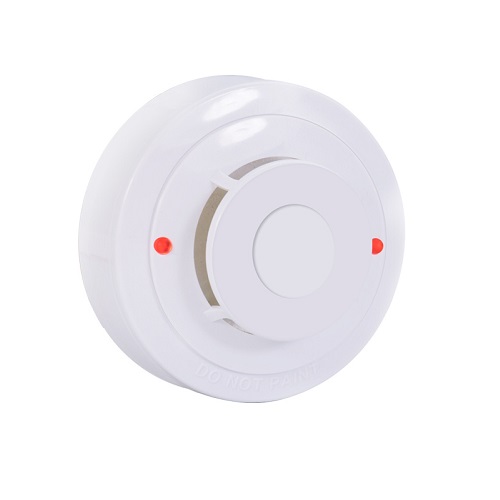
The Asenware Conventional Heat Detector is a fire detection device designed to identify abnormal heat conditions and alert a compatible conventional fire alarm system. It helps improve fire safety by detecting temperature-related signs of a potential fire and transmitting an alarm signal to the fire alarm control panel.
Heat detectors can be particularly useful in areas where dust, cooking fumes, steam or other environmental conditions may cause unwanted alarms from smoke detectors. Depending on the specific model, the detector may operate using a fixed-temperature threshold, a rate-of-rise mechanism, or a combination of both.
Designed for use as part of a compatible fire alarm installation, the Asenware Conventional Heat Detector can support fire protection in homes, offices, shops, warehouses and other facilities. The exact operating temperature, wiring requirements and compatibility should be confirmed against the specific model before installation.
Key Features
-
Heat detection: Identifies temperature conditions associated with potential fires.
-
Conventional system compatibility: Designed for use with compatible conventional fire alarm panels.
-
Flexible applications: Suitable for selected areas where heat detection is more appropriate than smoke detection.
-
Fire safety support: Helps provide an early warning of potential fire conditions.
-
Professional installation: Can be incorporated into a properly designed fire detection system.
-
Model-specific operation: Available specifications depend on the exact detector model.
Technical Specifications
| Specification |
Details |
| Brand |
Asenware |
| Product Type |
Conventional Heat Detector |
| Detection Method |
Heat detection |
| System Type |
Conventional fire alarm system |
| Operating Temperature |
Depends on the exact model |
| Detection Principle |
Fixed temperature, rate-of-rise, or combination, depending on model |
| Operating Voltage |
Model dependent |
| Alarm Current |
Model dependent |
| Installation |
Typically ceiling-mounted, subject to manufacturer instructions |
| Panel Compatibility |
Compatible conventional fire alarm panels, subject to specifications |
| Application |
Indoor fire detection |
| Certification |
Confirm for the specific model |
Why Choose the Asenware Conventional Heat Detector?
-
Supports fire detection in suitable environments.
-
Can complement smoke detectors in a comprehensive fire safety system.
-
Suitable for a range of residential and commercial installations.
-
Helps improve building fire protection when installed and maintained correctly.
Applications
-
Kitchens and food preparation areas, where an appropriate heat detector is specified.
-
Workshops and selected industrial spaces.
-
Warehouses and storage facilities.
-
Commercial buildings and offices.
-
-
Other locations where heat detection is recommended by the fire system design.
Frequently Asked Questions
1. What does a conventional heat detector do?
It detects specified heat conditions and sends an alarm signal to a compatible conventional fire alarm control panel.
2. What is the difference between a heat detector and a smoke detector?
A heat detector responds to temperature conditions, while a smoke detector responds to smoke particles. The appropriate choice depends on the environment and fire safety design.
3. Can this detector work with any fire alarm panel?
No. Compatibility depends on the detector’s electrical specifications and the panel’s requirements. Confirm compatibility before purchasing.
4. Where can a heat detector be installed?
It may be used in kitchens, workshops, warehouses and other suitable areas where heat detection is appropriate. Installation should follow the manufacturer’s instructions and applicable fire safety requirements.
5. What operating temperature does this detector support?
The operating temperature depends on the exact Asenware model. Check the product label or manufacturer datasheet for the confirmed rating.





 Asenware Conventional Heat Det...