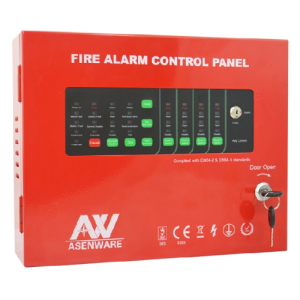
The Asenware 4 Zone Conventional Fire Alarm Panel provides centralized monitoring and control for conventional fire detection systems. It divides a building into four detection zones, making it easier to identify the area where an alarm has been activated.
The panel works with compatible conventional smoke detectors and manual call points to detect and indicate potential fire emergencies. When a connected device triggers an alarm, the panel provides visual and audible indications to alert occupants and responsible personnel.
Its fault monitoring features help identify problems within the detection circuits, while dedicated controls allow authorized users to reset the system, silence alarm sounders and initiate evacuation alerts. Backup battery support helps maintain system operation during mains power interruptions.
The Asenware 4 Zone Conventional Fire Alarm Panel is suitable for installations requiring straightforward fire detection and zone-based alarm monitoring.
Key Features
-
Four Detection Zones: Monitor four separate areas within a building.
-
Conventional Detector Support: Connect compatible smoke detectors and manual call points.
-
Alarm Indication: Helps identify the zone that has triggered a fire alarm.
-
Fault Monitoring: Indicates selected system and wiring faults.
-
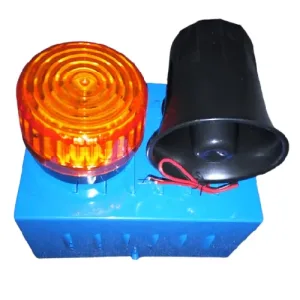
Sounder Circuit Support: Connect compatible fire alarm sounders for audible alerts.
-
Battery Backup: Supports backup batteries to help maintain operation during power interruptions.
-
Simple Controls: Includes functions for reset, silence and evacuation, depending on the model.
-
Zone Disablement: Supports authorized isolation of a zone for maintenance where provided.
-
Wall-Mounted Design: Suitable for installation in accessible monitoring locations.
Technical Specifications
| Specification |
Details |
| Brand |
Asenware |
| Product Type |
Conventional fire alarm control panel |
| Model |
Confirm exact model variant |
| Number of Zones |
4 |
| System Voltage |
Typically 24V DC |
| Mains Supply |
Model dependent |
| Backup Batteries |
Compatible rechargeable batteries |
| Detector Compatibility |
Compatible conventional smoke detectors and manual call points |
| Sounder Outputs |
Model dependent |
| Fire Relay |
Model dependent |
| Fault Relay |
Model dependent |
| Circuit Monitoring |
Open-circuit and short-circuit monitoring, depending on model |
| Controls |
Alarm reset, silence and evacuation, depending on model |
| Installation |
Wall-mounted |
Why Choose the Asenware 4 Zone Conventional Fire Panel?
-
Monitor four separate areas from one control panel.
-
Identify the zone where a fire alarm has been triggered.
-
Support compatible conventional fire detection devices.
-
Help identify system faults for maintenance.
-
Provide centralized alarm controls.
-
Suit smaller and medium-sized fire detection installations, depending on the building design.
Applications
-
Offices and commercial premises
-
Retail shops and shopping facilities
-
Schools and educational buildings
-
Residential apartment buildings
-
-
-
Clinics and administrative facilities
Frequently Asked Questions
1. How many zones does the Asenware 4 Zone Fire Panel support?
It supports four separate detection zones for monitoring compatible conventional fire detection devices.
2. Which devices can connect to the panel?
Compatible conventional smoke detectors, manual call points and fire alarm sounders can be connected according to the specific model’s circuit requirements.
3. Does the panel support backup batteries?
Compatible models support backup batteries to help maintain fire alarm operation during a mains power failure. Confirm the battery specifications and whether batteries are included.
4. Can the panel identify the location of an alarm?
It indicates the affected detection zone, helping personnel narrow down the area where the alarm originated. It does not identify the exact individual detector in a conventional zone.
5. Is this panel suitable for commercial buildings?
It may suit smaller commercial buildings that require four detection zones. The final selection should follow the building’s fire risk assessment and applicable fire safety requirements.




 Asenware 4 Zone Conventional F...